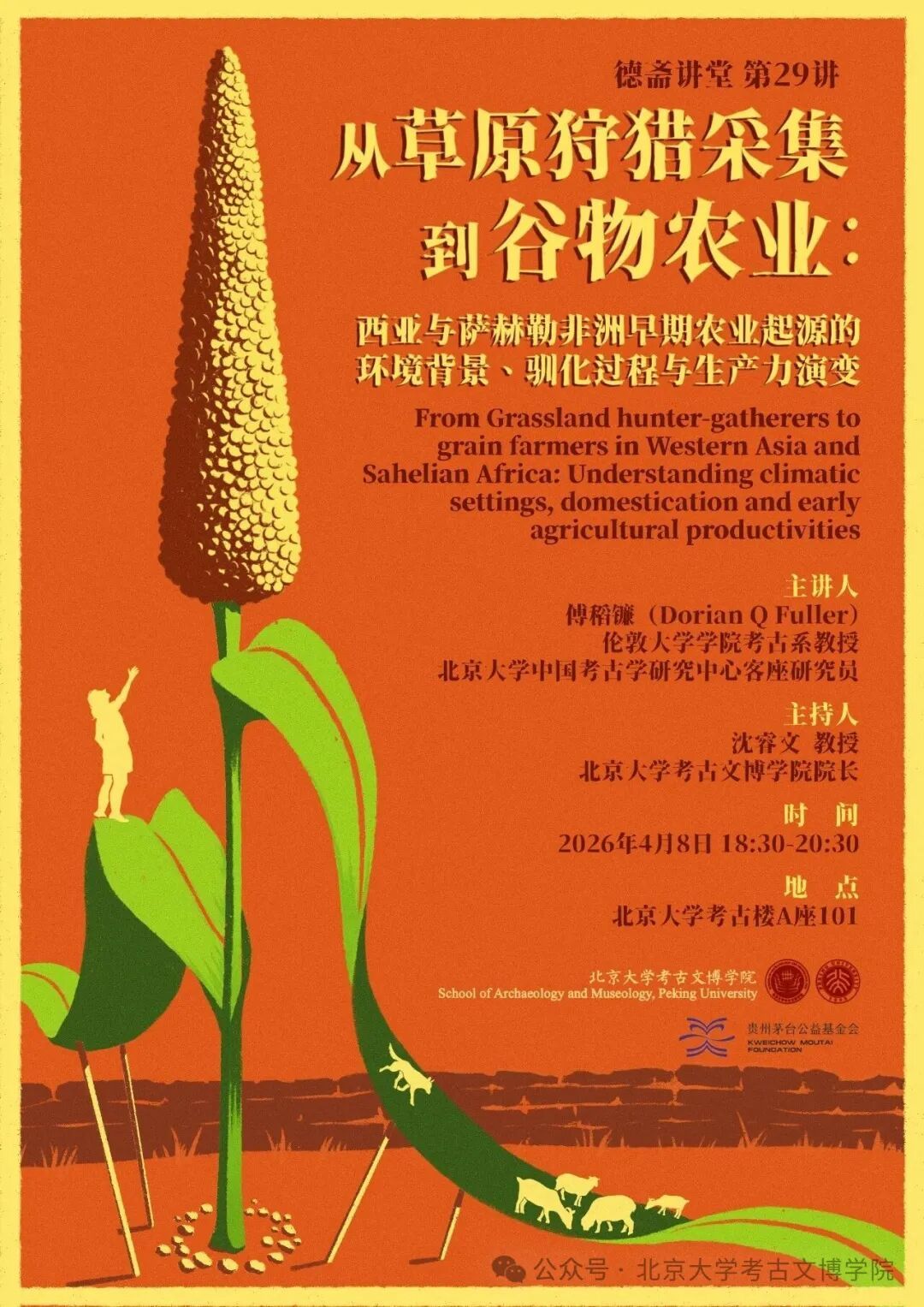
德斋讲堂 第二十九讲从草原狩猎采集到谷物农业:西亚与萨赫勒非洲早期农业起源的环境背景、驯化过程与生产力演变
From Grassland hunter-gatherers to grain farmers in Western Asia and Sahelian Africa: Understanding climatic settings, domestication and early agricultural productivities
主讲人:傅稻镰(Dorian Q Fuller)伦敦大学学院考古系教授,北京大学中国考古学研究中心客座研究员
主持人:沈睿文 教授北京大学考古文博学院院长
时 间:2026年4月8日18:30-20:30
地 点:考古楼A座101
讲座摘要
农业的起源与动植物的驯化,并非一蹴而就的革命性转变,而是在不同区域中持续数百年的长期过程。在西亚与撒哈拉以南的非洲地区,主要作物都源自半干旱草原生态系统中的野生植物资源。随着更新世之后气候变化推动草原带分布的迁移,一些狩猎采集群体开始尝试植物栽培活动,从而逐步开启了农业化进程。植物考古学研究表明,谷物的驯化经历了一个缓慢而长期的协同演化过程:西非的珍珠粟、苏丹地区的高粱,以及西亚地区的小麦和大麦,均是在这一过程中逐渐形成的。在西亚,这一变化与定居生活方式的出现密切相关,人类社会逐步由多元的生业模式向以农业为核心的生业经济结构转变;随着家畜,尤其是绵羊和山羊的普及,对作物生产的依赖也不断加深。在非洲地区,驯化作物与家畜的结合同样推动了聚落形态的变化,并显著延长了遗址的持续占用时间:苏丹地区约在公元前3000年之后出现这一趋势,西非地区则在公元前2000年之后才逐渐明显。由于非洲与西亚在早期农业生产力水平上存在差异,各区域在新石器时代的聚落规模、人口承载能力以及农业扩散速度上也呈现出不同的发展路径。通过对这些区域的比较研究,可以归纳出若干草原生态系统背景下农业起源的普遍模式。这些规律不仅有助于理解西亚与非洲的农业化进程,也为认识包括中国北方黄土高原地区在内的其他地区早期农业起源提供了有价值的参考。
Abstract: Domestication processes and agricultural origins were both protracted, regional processes, taking place over many centuries. In both west Asia and the sub-Sahara crops derived from semi-arid grassland species. As post Pleistocene climate change shifted these grassland distributions some hunter-gatherer groups experimented with cultivation. Archaeobotany now documents slow coevolution of domesticated cereals- pearl millet in west Africa, sorghum in Sudan, and wheat and barley in Southwest Asia. In west Asia this was associated with sedentism and gradual change to dependence on agriculture. Increased reliance on crops increased as domesticated livestock, especially sheep and goat, became more common. In Africa also livestock and domesticated crops came together an increase site longevity, after 3000 BC in Sudan and after 2000 BC in west Africa. Different reconstructed productivities in Africa and Western Asia meant that site sizes and rates of Neolithic expansion differed between regions. These comparisons and contrasts offer some general patterns in grassland agricultural origins that may be relevant for other regions, including the loess zone of northern China.